Let's be honest, digital marketing is no longer just a checkbox on your MSP's to-do list. It's the engine that drives predictable, scalable growth. In a world where your next client’s first move is a Google search, being invisible online isn’t just a missed opportunity; it’s a serious business risk.
For most MSP owners, the ultimate goal is predictable growth. But relying on word-of-mouth and the occasional networking event is like running a storefront that's only open a few hours a day. It works, sure, but your growth is capped by who you happen to know and when you can meet them. This leaves far too much to chance.
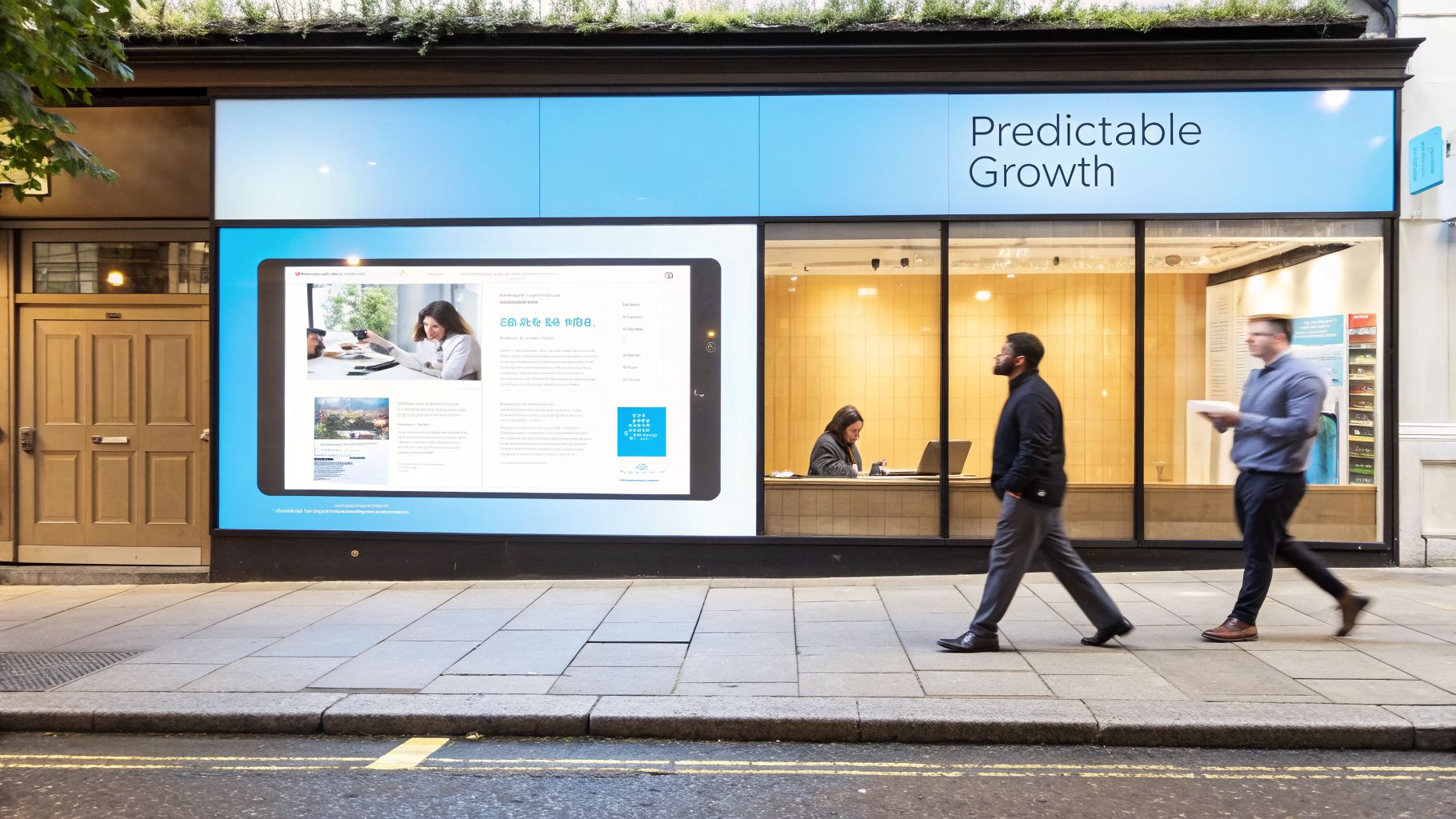
A smart digital marketing strategy, on the other hand, is your 24/7 digital storefront. It’s always open, always working, and ready to engage potential clients the exact moment they’re searching for solutions to their IT problems. This isn't just about having a website; it's about turning that website into a magnet for qualified leads.
The old playbook of relying solely on referrals and cold calls is running out of steam. A digital-first approach directly addresses the limitations of traditional marketing, creating a system for consistent growth.
Growth ChallengeTraditional Approach (Limited)Digital Marketing Solution (Scalable)Lead GenerationInconsistent referrals, unpredictable timing.A steady, predictable stream of inbound leads.Building TrustRequires in-person meetings, slow to scale.Builds authority with content before the first call.Client TargetingBroad and untargeted (local events, etc.).Laser-focused on ideal industries and company sizes.Measuring ROIDifficult to track, based on guesswork.Clear data on what works and where to invest.
This table shows the fundamental shift: moving from a reactive, luck-based model to a proactive, data-driven system for acquiring new business.
The global managed services market is set to explode, projected to hit nearly $430 billion by 2026. This surge means more businesses are actively looking for specialized IT support. With 64% of MSPs already reporting revenue gains and 67% expecting that growth to continue, the MSPs who show up in search results are the ones positioned to win.
In fact, MSPs with well-optimized websites are 2.8 times more likely to hit their growth targets. It's clear this isn't just a passing trend; it's a fundamental change in how businesses find and choose their technology partners.
A digital-first approach helps you:
The real goal of digital marketing for an MSP is to transform your business from a commodity service provider into a trusted authority that clients actively seek out. It’s the difference between chasing leads and having qualified leads come directly to you.
Ultimately, investing in a cohesive digital marketing plan isn't a cost: it's your most strategic asset for achieving scalable growth. If you want to understand how to build this kind of system, you can get started by exploring our guide to B2B SEO solutions.
Your website is your digital storefront. But if potential clients can't find it, it might as well be on a deserted island. This is where Search Engine Optimization (SEO) comes in. It’s the art and science of making sure you show up when a business owner searches for IT help.
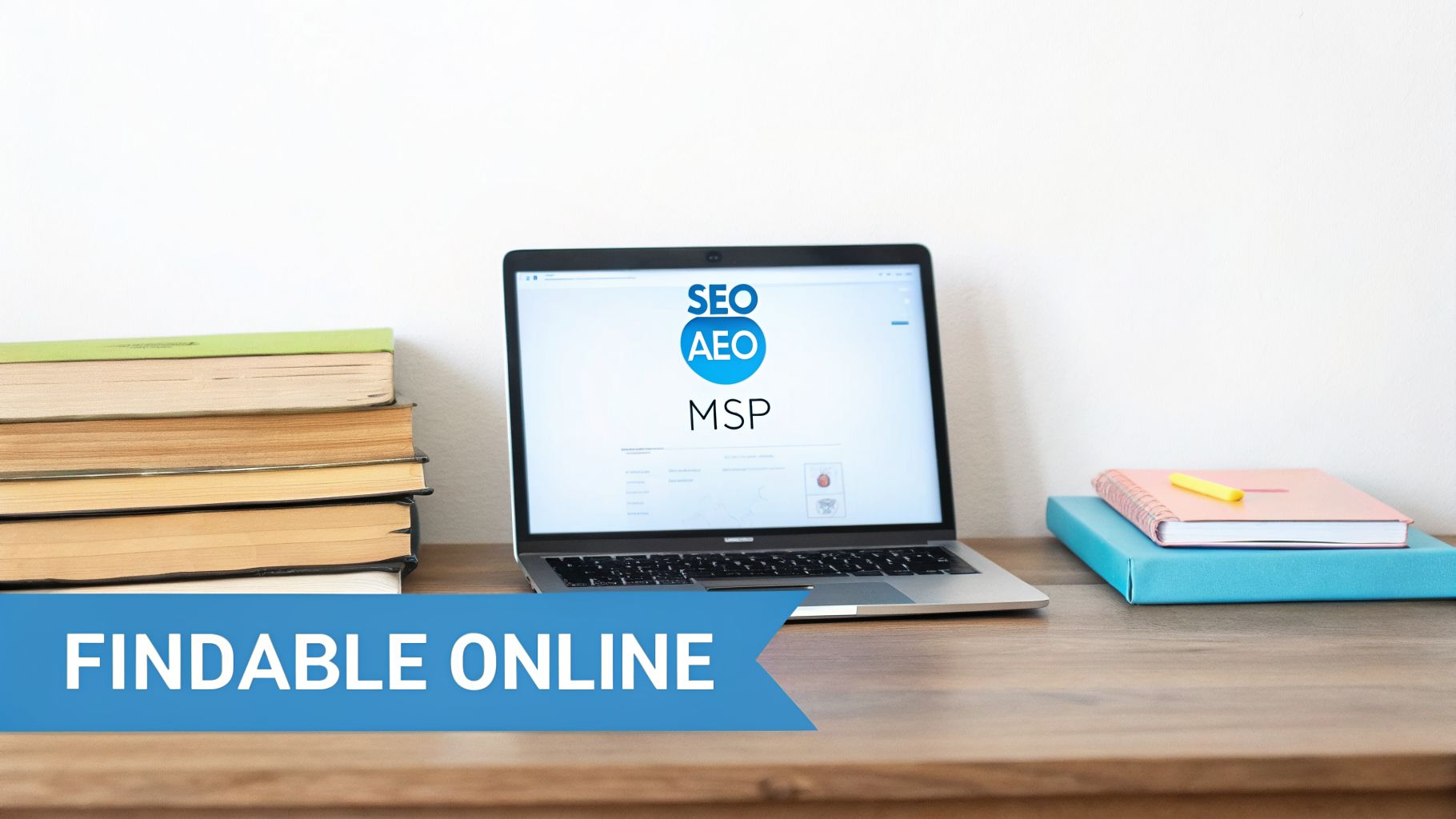
Think of it like this: traditional SEO involves prepping your website for a human librarian (let's call him Google). You organize your content logically, label everything clearly, and prove your expertise. That way, when someone asks the librarian a question, he knows to point them straight to your site. This is the bedrock of any solid digital marketing plan for MSPs looking for a consistent flow of leads.
Now, there's a new layer to consider: AI Engine Optimization (AEO). While SEO focuses on getting found on Google, AEO is about making your content understandable and valuable to AI assistants like ChatGPT and Gemini. More and more, businesses are using these tools for initial research, and you want your MSP to be the trusted source they quote.
SEO isn't a "set it and forget it" task. It's an ongoing strategy that methodically builds a predictable pipeline of inbound leads. Done right, your website transforms from a simple brochure into a 24/7 sales asset. By focusing on both SEO and AEO, you ensure your MSP gets found, no matter how a client is searching.
A strong SEO foundation rests on three key pillars. They all work in concert to boost your visibility online and, more importantly, attract the right kind of clients. This structured approach helps ensure you're not just getting more traffic, but traffic that actually converts.
Your goal isn't just to rank. It's to rank for the exact problems your ideal clients are trying to solve. Effective MSP SEO connects your expertise directly to their most urgent business needs.
The data backs this up. With 60% of MSPs prioritizing new client acquisition, a smart SEO and AEO strategy isn't just nice to have, it's essential. This is especially critical when you consider that 88% of buyers do their homework online before ever making contact. A strong search presence is your best chance to capture their attention first.
This consistent effort builds the authority and trust that makes your MSP the obvious choice when a prospect is finally ready to make a decision. To start building a stronger foundation today, take a look at our guide on how to conduct an SEO audit for your own website.
Getting found online is a massive win, but it's only half the job. The moment a potential client clicks to your website, your content needs to take over. It becomes your best salesperson, working 24/7 to prove your expertise, build trust, and show exactly why your MSP is the right choice, long before they ever consider picking up the phone.
Think of it this way: SEO gets them in the door, but it's your content that convinces them to stay for a real conversation.

Here's a secret: truly effective content rarely tries to sell your services directly. Instead, it focuses on solving your clients' problems. By answering their most pressing questions and speaking to their specific pain points, you instantly shift from being just another IT vendor to becoming a trusted advisor. This is a cornerstone of a successful digital marketing for MSPs strategy, turning simple clicks into tangible client relationships.
The best content an MSP can create is educational, not promotional. Your primary goal is to provide genuine value that showcases your deep understanding of the business challenges your clients face every day. When a prospect reads your content, they should feel like you're speaking directly to them and their situation.
For MSPs, we've found that three types of content consistently deliver the best results. Each one plays a different role in guiding a prospect from their initial research all the way to their final decision.
The most powerful content strategy is one built on empathy. It starts by identifying your ideal client's biggest fears and challenges, then creates content that offers clear, actionable solutions and peace of mind.
Feeling stuck on what to write about? Your daily conversations are an absolute goldmine of topics. Every single question a client asks is a potential blog post that could attract hundreds of other business owners with the exact same problem. This is how you methodically build your online presence and learn more about topical authority, a concept that can seriously amplify your content efforts.
Here are a few specific content ideas designed to attract and convert your ideal MSP client:
For the vast majority of MSPs, new business isn’t found on some national stage. It’s won right in your own backyard. Winning the local game is the absolute bedrock of a solid digital marketing for MSPs strategy, yet far too many providers treat their local presence as an afterthought.
Think of it this way: local search is the digital equivalent of your town square. If you're the trusted, visible expert everyone knows, you're the first one they call when a server crashes. But if you're invisible online, you don't even get the chance to bid on the work.
Before you even dream of expanding, you have to nail the fundamentals of local SEO. The entire goal is to make it ridiculously easy for businesses in your service area to find you at the exact moment they’re searching for help. You want to be the top result when someone types "IT support near me" or "managed services in [Your City]."
Your number one priority here, without a doubt, is your Google Business Profile (GBP). This isn't just another profile to fill out; it's your digital storefront, your business card, and your public reputation all rolled into one. An optimized and active profile is the single most powerful tool you have for local visibility.
Here are the essentials for a local SEO strategy that actually works:
Once you've become the go-to MSP in your immediate area, you can start aiming higher. This is where you graduate from being a general "IT support" provider to becoming the sought-after expert for specific industries, like healthcare, legal, or manufacturing. This is how you stop competing on price and start competing on specialized expertise.
This strategy demands a much more focused approach. You're no longer just marketing to a zip code; you're marketing to a specific kind of business with its own unique set of problems and compliance needs. Your marketing has to prove you understand their world.
Moving into vertical markets is about speaking your client's language. A law firm doesn't just need IT support; they need IT support that understands e-discovery, case management software, and stringent client confidentiality.
To make this pivot successful, you must create content that speaks directly to these niche audiences. Start writing blog posts on "HIPAA-Compliant Cloud Solutions for Dental Clinics" or develop a guide on "Cybersecurity Best Practices for Accounting Firms." This kind of tailored content attracts higher-quality leads who are already prepared to pay a premium for a partner who gets it.
This is also where paid advertising can give you a surgical advantage. Instead of broad, generic campaigns, you can use platforms like LinkedIn to target decision-makers by job title, like "Practice Manager" or "CFO," at companies within your chosen vertical. This level of precision ensures your marketing budget is spent reaching the exact people who have the authority to hire you.
It's a classic saying for a reason: you can't manage what you don't measure. In marketing, it’s all too easy to get mesmerized by a flood of data, but chasing the wrong numbers, what we call "vanity metrics," is a fast track to a wasted budget. A successful digital marketing for MSPs program cuts through the noise and zeroes in on what actually grows your business.
A solid marketing dashboard should answer the questions that keep you up at night. Are we actually getting found online? Are the right kinds of companies finding us? And, most importantly, is this investment translating into real, qualified opportunities for our sales team? Focusing on a handful of Key Performance Indicators (KPIs) is how you get that clarity.
Tracking the right metrics isn't just for your own peace of mind; it's about having productive, data-backed conversations with your marketing team or agency. It gets everyone on the same page, focused on the one goal that truly matters: generating predictable revenue. Don't let yourself get distracted by metrics that feel good but have zero impact on your sales funnel.
Think of these KPIs as the vital signs for your marketing efforts. They tell you exactly where your strategy is working and, just as crucially, where you need to make adjustments. Reviewing them regularly is the key to making smart decisions that consistently fuel your MSP's growth.
The objective is never just more traffic. It’s attracting the right traffic, the local businesses that fit your ideal client profile, and effectively guiding them from a first click to a signed contract. Your KPIs need to tell that full story.
Here are the foundational metrics you should be watching like a hawk:
Simply knowing these metrics isn't enough. The real power comes from organizing them into a dashboard that gives you a clear, at-a-glance view of your marketing's performance. This isn't about getting lost in complex analytics; it’s about having the right information to make actionable decisions.
By consistently monitoring these specific KPIs, you shift from guessing to knowing. You can definitively prove the ROI of your marketing and build a reliable pipeline of new clients for years to come.
Strategy is great on paper, but turning it into action is what actually grows your MSP. Let's break down the essentials of digital marketing for MSPs into a simple, 90-day plan. This isn't about overwhelming your team; it's a practical roadmap to get your foundation right and start building a predictable flow of new leads.
The first 30 days are all about getting your house in order. We need to patch the leaks and build a solid base for everything that comes next. The goal isn't a flood of new business on day one. It's to make sure your digital presence is professional, accurate, and ready to convert the right visitors when traffic starts picking up.
With a solid foundation in place, month two is about proving your expertise and showing up where local clients are looking. This is where you shift from fixing things to actively building assets that generate leads for months and years to come.
This is your chance to become the go-to resource, not just another vendor pitching services. Your content should answer the real, urgent questions your best clients have, building trust long before they’re ready to sign a contract.
This month, focus on creating two key pieces of content based on the keywords you identified earlier. This could be a blog post like, "5 Critical Cybersecurity Steps for Local CPA Firms," or a detailed service page for a high-value offering like co-managed IT. At the same time, set up a simple process to start asking for reviews from your happiest clients.
In the final 30-day stretch, we’ll amplify your voice and start tracking what’s actually working. This means getting your expertise seen beyond your own website and finally looking at the data that will guide your decisions moving forward. It’s time to see the first tangible returns on your effort.
Think of your progress in stages. First, you need to build traffic. That traffic helps you earn better rankings. And those rankings are what ultimately drive qualified leads.
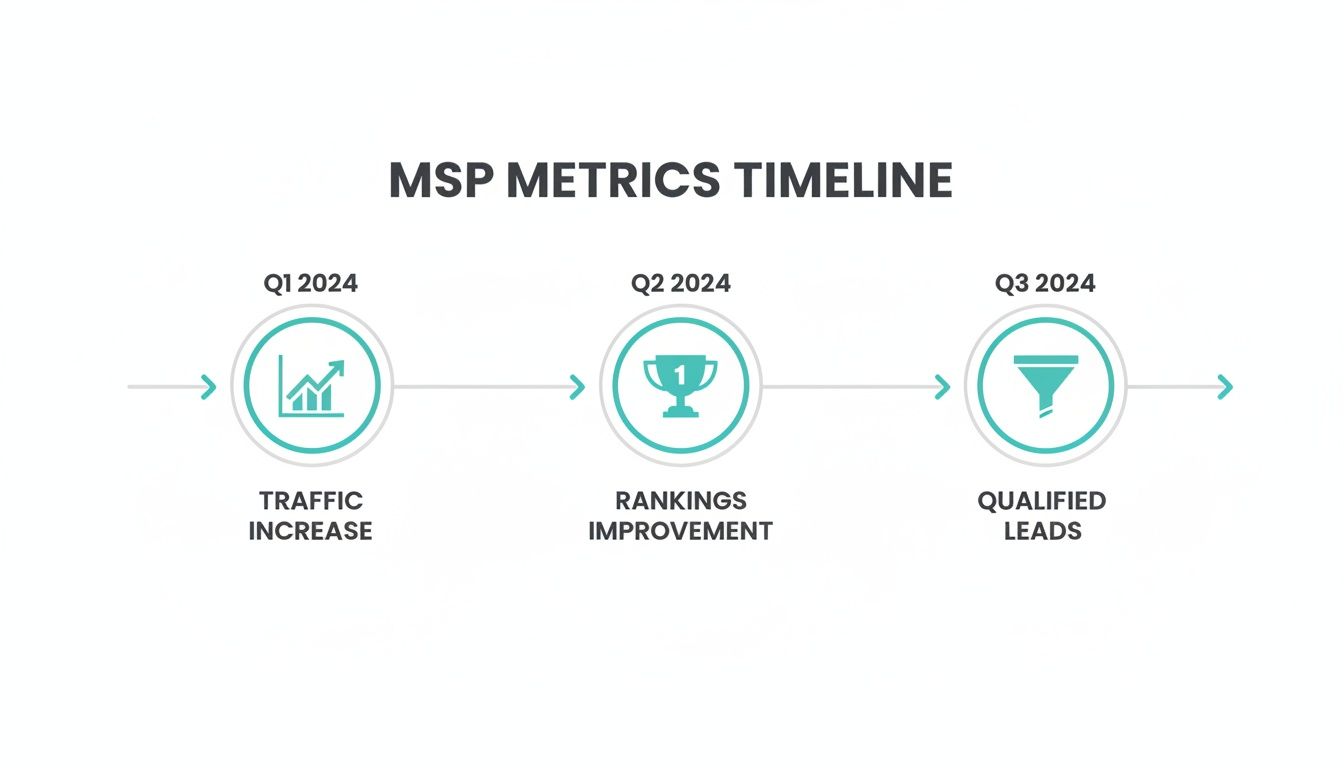
As you can see, you can't get leads without first getting found. This month, set up a basic dashboard in Google Analytics to track your organic traffic and contact form submissions. Then, identify one or two industry blogs or local business journals where you could contribute a guest article. This builds powerful backlinks and establishes you as an expert in your market.
By the end of this 90-day sprint, you’ll have a solid marketing foundation, valuable content that attracts clients, and a system for measuring what matters. You’ve done the prep work; now it's time to execute.
When you're running an MSP, diving into digital marketing can feel like a whole other job. It's natural to have questions. You need straightforward answers to help you decide where to put your marketing budget and effort. Let's tackle some of the most common ones we hear from MSP owners just like you.
This is the big one. While you might get some quick wins from fixing technical issues on your site in a few weeks, real, sustainable SEO results take time. For most MSPs, you should plan on seeing a meaningful shift, like ranking for your core service keywords, in about 4-6 months.
SEO isn't a faucet you can just turn on and off. It’s a long-term strategy. The payoff for that patience is a steady stream of high-quality leads that costs less over time than paid ads. Think of it as building a valuable asset for your business, not just paying for a short-term rental.
If you do only one thing, make it this: claim and completely fill out your Google Business Profile (GBP). Seriously. For a local service business, your GBP is your digital front door. It’s your billboard, your sales brochure, and your first impression all rolled into one.
A fully optimized profile, with the right service categories, good photos, and a consistent flow of new, positive reviews, is the fastest way to get noticed in local search results. For many MSPs, a well-managed GBP is the single thing that makes the phone start ringing.
Many MSP owners can, and should, handle the basics themselves. You know your business and your clients better than anyone. Taking charge of your Google Business Profile, making simple website updates, and asking satisfied clients for reviews are all great places to start.
However, when you get into more advanced strategies, the game changes. Consistent content creation, technical SEO, and building high-quality backlinks aren't just one-and-done tasks. They require a significant time commitment and a specific skillset to get right.
This is where a specialized agency can deliver a much higher return. An agency that lives and breathes digital marketing for MSPs brings proven systems and deep industry experience to the table. They can execute advanced strategies effectively from day one, freeing you up to focus on what you're best at: running your MSP.
Ready to stop guessing and start building a predictable lead generation engine? At MSP SEO Agency, we build the SEO and content systems that help managed service providers dominate their local markets. Schedule a call with us to see how we can help you grow: https://www.themspseoagency.com.
See how targeted SEO delivers measurable impact for managed service providers. Explore our proven strategies and real-world outcomes.